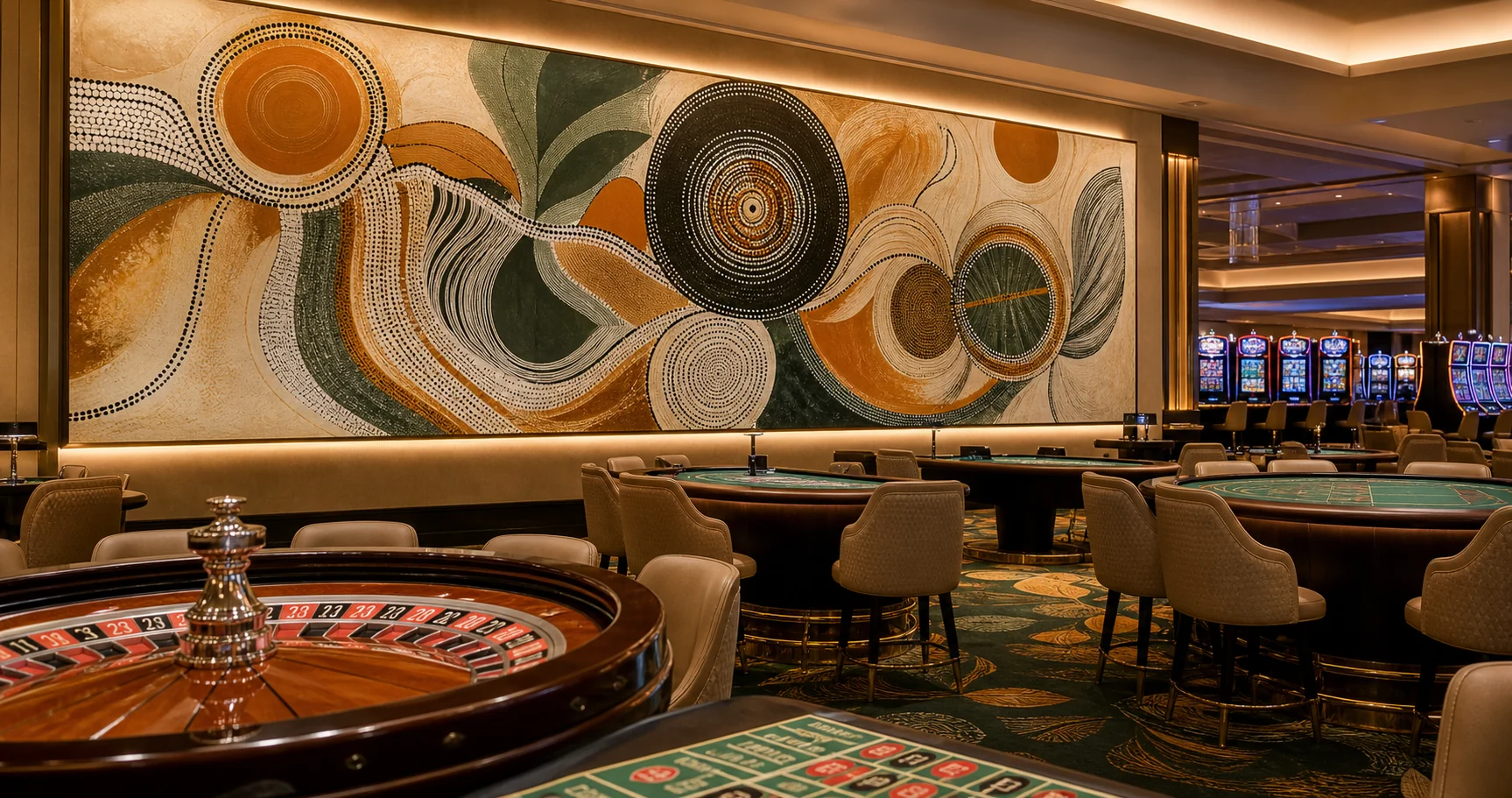
Write an art strategy before selecting works.
Define the collection’s purpose, audience, geographic focus, media, budget, decision process and desired relationship with Australian artists. Map locations by viewing distance, dwell time, daylight, temperature, humidity, security, access and architectural importance. This avoids filling leftover walls with disconnected pieces.
A strategy should also state what the collection will not do. Avoid using art to disguise unresolved architecture, copying an artist’s visual language into décor, or selecting work only because it matches a palette. Meaningful integration respects the work as an independent cultural contribution.
Compare acquisition, commission and lease.
| Model | Benefit | Responsibility to clarify |
|---|---|---|
| Direct acquisition | Long-term collection and asset ownership | Title, provenance, authenticity, copyright, insurance, conservation and deaccession policy |
| Commission | Site-specific response and direct artist collaboration | Brief, stages, approvals, moral rights, fabrication, installation, maintenance and cancellation |
| Lease | Rotation, curatorial flexibility and lower initial commitment | Term, substitution, handling, insurance, installation, condition reporting and renewal |
| Temporary program | Events, changing exhibitions and community participation | Selection governance, public safety, labelling, security, storage and removal |
Commission with a fair, staged brief.
The artist brief should explain the site, audience, architectural context, constraints, available budget, programme, required interfaces and selection criteria without prescribing the visual solution. Separate the artist fee from fabrication, engineering, travel, insurance, installation and contingency so creative labour is visible.
Use staged approvals such as expression of interest, concept, developed design, fabrication sample, final fabrication and installation. Pay appropriately for shortlisted concept work. Record who owns physical work and intellectual property, what licence permits photography or marketing, how the artist will be credited and how moral rights will be respected. Obtain specialist legal advice for the actual agreement.
Do not treat artist rights as a boilerplate transfer. The project may own an installed work while the artist retains copyright and moral rights. Reproduction, adaptation, relocation or destruction can require specific consideration and consent.
Cultural protocols are relationships.
For Aboriginal and Torres Strait Islander art, stories, knowledge or community engagement, work through appropriate artists, art centres, cultural advisers and Traditional Owners. Authority is specific to people, Country and material; a general acknowledgement is not permission to reproduce a story or motif.
- Allow time for consultation, community decision-making and cultural review.
- Agree attribution, language, image use, reproduction, access restrictions and any culturally sensitive content.
- Ensure transparent payment and benefit to artists and communities.
- Use provenance and authenticity processes appropriate to the work and purchasing channel.
- Plan for future photography, relocation, conservation and public interpretation within the agreement.
Obtain current specialist guidance for the project. This page provides general principles, not cultural, legal or curatorial authority.
Integrate art with the building.
Coordinate loads, fixing, structure, power, data, ventilation, access, lighting, sprinklers, cameras, cleaning and public reach. Large suspended or sculptural pieces may need engineering and construction-stage embeds. Media works need restart behaviour, content playback, software ownership and a plan for obsolete hardware.
Prepare installation drawings and a method statement. Use qualified art handlers where appropriate. Condition-report every work before and after transport and installation, with detailed photographs. Security fixing should balance removal resistance with safe conservation access.
Label and interpretation
At minimum, confirm the artist’s preferred name, work title, year, medium and credit line. Additional interpretation should be written or approved with the artist or curator. Ensure text is readable, accessible and positioned without competing visually with the work.
Plan conservation from day one.
Document acceptable light exposure, temperature and humidity range, cleaning restrictions, inspection frequency and emergency contacts. Housekeeping should never improvise cleaning on an artwork. Facilities teams need to know which apparent marks are intentional and which indicate damage.
Maintain an artwork register containing images, dimensions, location, artist, provenance, acquisition or lease documents, value, insurer, condition reports, handling instructions, rights and credit requirements. Review values and insurance as advised by relevant professionals. Disaster planning should cover leak, fire response, impact and unauthorised movement.
Light is cumulative. Coordinate artwork lighting with a conservator or curator where works may be sensitive. A visually comfortable level can still cause long-term fading if exposure is continuous.
Australian art pathway.
Artbank is an Australian Government visual-arts initiative that offers business art leasing and curatorial support, with delivery and installation pathways. Its public collection spans Australian contemporary art. It is one possible route, not an endorsement or the only model; galleries, Aboriginal-owned art centres, independent curators and direct artist relationships can also be appropriate when ethically and professionally managed.