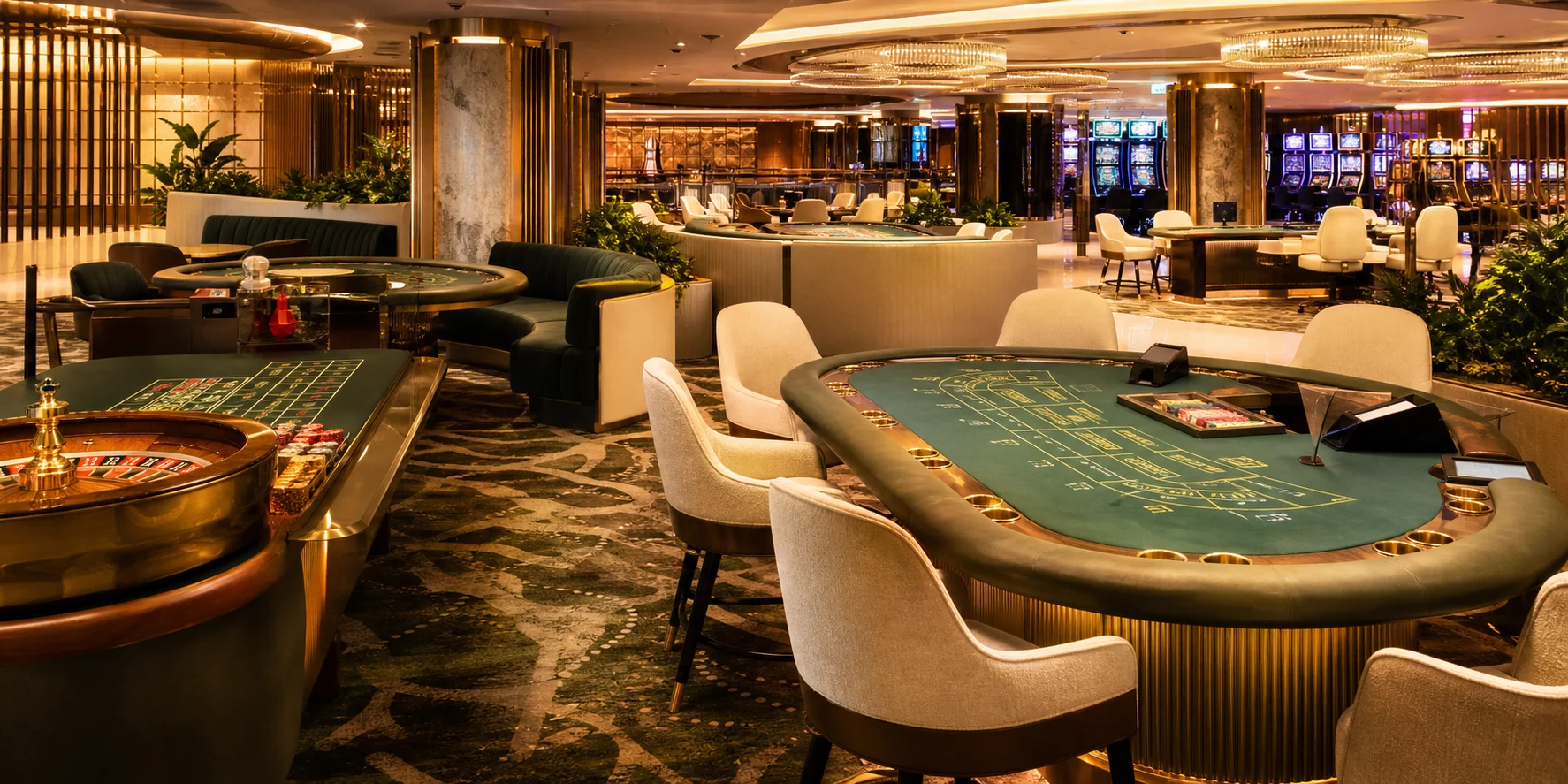
Plan behaviour before form.
A VIP zone may combine short conversations, longer dwell, food and beverage service, personal-item storage, discreet staff observation and multiple levels of privacy. Start by mapping those behaviours. A photogenic chair that blocks circulation, traps debris or forces staff to move it repeatedly is not a successful selection.
Develop a furniture plan against the operational plan. Record clear circulation, staff service paths, wheelchair approach and transfer zones, sightlines, egress, floor boxes, cleaning access and the swing of adjacent doors. Where layouts may change, identify which pieces are genuinely mobile and which need discreet anchoring to prevent drift or misuse.
Accessibility is a project input, not a product label. Seating heights, arm positions, table clearances, approach routes and companion seating should be reviewed with the project access consultant against the applicable design and approval context.
Core furniture types.
| Type | Best suited to | Key risks to resolve |
|---|---|---|
| Freestanding lounge chair | Flexible conversation groupings and perimeter lounges | Weight, floor protection, stable arms, clean-out gaps and replacement glides |
| Modular sofa | Large zones that may be reconfigured | Module creep, connector visibility, uneven wear and access beneath |
| Fixed banquette | Space-efficient zoning, alcoves and integrated service | Wall interfaces, ventilation, removable panels, power coordination and site tolerances |
| Occasional table | Drinks, small plates and personal belongings | Tip stability, sharp edges, stain resistance, top replacement and accessible height |
| Host or concierge piece | Arrival, guest assistance and controlled storage | Cable management, staff ergonomics, security, accessibility and front-of-house durability |
Write a measurable performance brief.
State the use intensity and expected life rather than using only words such as “contract grade”. Ask bidders to declare frame construction, joinery method, suspension system, foam build-up, replaceable components and maximum user load where relevant. For timber and metal finishes, define the approved visual range and repair approach; for stone and glass tops, resolve impact, edge and replacement risk.
- Stability: test representative pieces on the proposed carpet and under realistic leaning loads.
- Cleanability: obtain approved chemicals, dwell times and disinfection limits from both upholstery and finish suppliers.
- Maintainability: prefer field-replaceable glides, covers, seat pads, arms and table tops in high-wear positions.
- Fire performance: obtain project-specific evidence for the composite upholstery assembly—not merely a generic fabric statement.
- Indoor environment: request relevant emissions, material-content and environmental information where the project brief requires it.
Upholstery is an assembly.
Performance depends on the fabric or leather, backing, adhesive, foam, seams, thread, piping and the geometry to which they are applied. A textile tested flat may behave differently over a tight compound curve. Review the complete proposed assembly and avoid comparing abrasion numbers from different test methods as if they were directly equivalent.
Use pattern placement drawings for large repeats, directional textures and panelled forms. Approve seam positions where contact and spills are least damaging. Light colours can work in high-use environments when soil-release performance, cleaning response, spare yardage and panel replacement are deliberately planned; a dark colour is not automatically lower maintenance.
A useful sample review
- View the sample under the final warm and dimmed light levels, not only at a daylight desk.
- Test the venue’s actual cleaning products on the finish and record the result.
- Assess colour transfer, seam puckering, pile direction and pressure marking.
- Keep a signed control sample that records supplier, range, colour, batch and approval date.
Prototype before committing.
A full-size prototype should answer ergonomic, aesthetic and maintenance questions. Review seat height and depth, back angle, arm support, cushion recovery, under-seat access, joins, glides and the relationship to adjacent tables. Invite operations, housekeeping, facilities, access and design representatives to one recorded review.
For custom pieces, the programme should identify design freeze, engineering, shop drawings, finish samples, prototype approval, production, factory inspection, packaging, shipping, storage, installation and defect rectification. Record who owns any custom tooling and whether a later replacement can be ordered from the approved information.
Commercial comparison: normalise freight, installation, floor protection, storage, customs where applicable, spare units, spare upholstery, warranties and aftercare. The lowest unit price can carry the highest operational cost.
Handover for the next five years.
Request an asset schedule with product codes, finishes, serial or batch references, room locations, supplier contacts and warranty dates. The care manual should distinguish routine cleaning, spot treatment and professional intervention. Provide spare glides, touch-up systems and agreed quantities of fabric or hides stored under suitable conditions.
During installation, inspect damage before packaging is removed from site, photograph each area, verify anchoring and connectors, and quarantine non-conforming pieces. Agree whether upholstery repairs will occur on site or off site and how temporary replacement seating will be handled.
Australian supplier pathways.
The directory includes Schiavello Furniture, Stylecraft and Obodo as examples of suppliers with public Australian commercial or hospitality capability. Inclusion is not endorsement. Confirm product suitability, current representation, project capacity and all technical evidence directly.