Build an asset system, not a shopping list.
A casino equipment schedule should connect each asset to its permitted use, location, power and data needs, floor loading, service clearances, surveillance coverage, furniture, signage, software, consumables and support contract. Similar-looking equipment may have materially different jurisdictional approvals and infrastructure requirements.
This guide concerns professional design and procurement. It does not explain how to play games, improve odds or access gambling. All gambling equipment must be supplied, configured and operated only within the applicable Australian legal, licensing and regulatory framework.
| Equipment family | Typical components | Primary coordination risk |
|---|---|---|
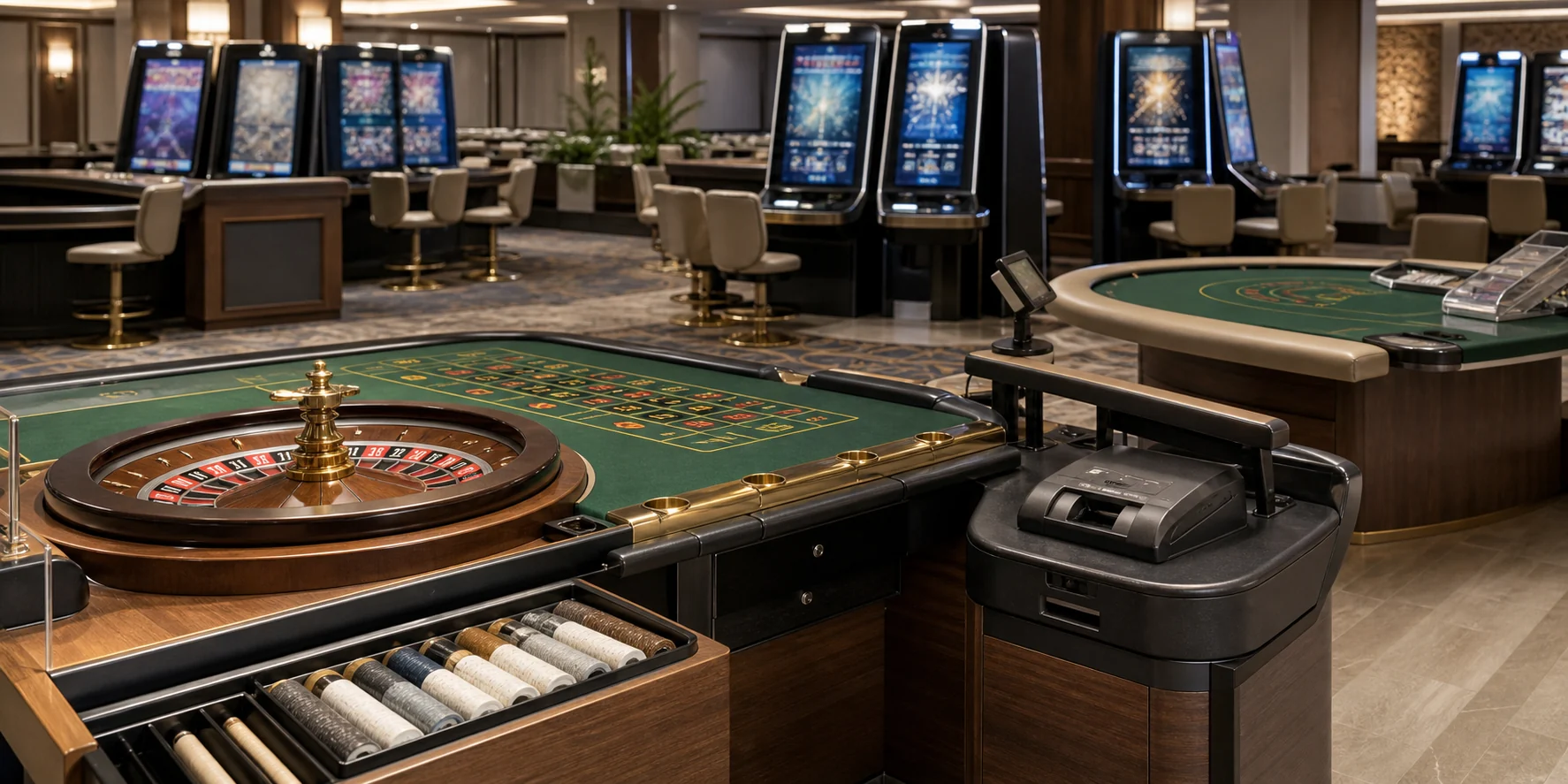
| Live tables | Table frame, layout, rail, chip tray, drop equipment, card shoe, shuffler, displays and dealer controls | Approved configuration, ergonomics, surveillance views, floor services and secure access |
| Roulette systems | Wheel, table, sensors or displays where approved, result presentation and associated electronics | Level and stability, calibration responsibility, lighting/reflection and certification |
| Electronic gaming cabinets | Cabinet, displays, controls, power, network, audio, seating and approved software/content | Jurisdictional approval, floor-box capacity, heat, sound spill, network and service clearance |
| Electronic table gaming | Terminals, central game device, displays, controllers, network and seating | Sightlines, latency, resilience, approved system boundaries and technical support |
| Kiosks and service terminals | Enclosure, touchscreen, scanner, printer, reader, network and accessible interface | Privacy, reach ranges, queuing, consumables, service doors and transaction-system integration |
| Support equipment | Shufflers, chip handling, secure trolleys, storage, podiums, barriers and maintenance tools | Workflow, secure storage, charging, cleanability, manual handling and spare-part control |
Plan the gaming floor around people and services.
Begin with operator and regulatory requirements, then test staff positions, patron seating, wheelchair approach, circulation, emergency egress, queuing, beverage service, cash or controlled-item movement, surveillance, cleaning and maintenance routes. Equipment dimensions should come from current supplier drawings rather than generic blocks.
Use coordinated setting-out drawings for each equipment type. Show accessible floor boxes, power isolation, data outlets, equipment anchoring where required, floor transitions, ventilation paths, clear service zones and the permitted furniture envelope. Validate the plan with full-size templates or first-of-type installations before the entire floor is fixed.
Approvals are configuration-specific. A cabinet family, game, peripheral, firmware version or table system may be treated differently across Australian jurisdictions. Confirm the exact offered configuration and current regulator requirements before ordering, moving or modifying equipment.
Create a traceable approval file.
Request the legal supplier entity, applicable licences, regulator approval references, exact model and configuration, electrical compliance, product manuals, installation requirements, software and firmware identifiers, security features, accessibility information, warranty and service arrangements. The project team should verify these records with the relevant operator, regulator and qualified advisers.
Do not assume an overseas installation establishes Australian suitability. Local supply, monitoring and servicing can require licences. As one example of jurisdictional controls, Queensland publishes current licensing information for organisations that supply, monitor or service electronic gaming machines. Other states and territories have their own frameworks.
Resolve every interface before delivery.
- Electrical: connected load, socket and isolation type, power quality, UPS strategy where appropriate, test/tag responsibility and shutdown behaviour.
- Data: physical ports, network ownership, approved protocols, segregation, addressing responsibility, monitoring and secure remote-support method.
- Cooling: heat output, air paths, cabinet spacing, underfloor or ceiling coordination and acceptable operating conditions.
- AV and audio: overhead displays, device audio, paging, hearing needs, content control and acoustic spill between banks.
- Surveillance: required views should be established by authorised security stakeholders without publishing sensitive layouts.
- Floor and furniture: loading, fixing, glides, chair movement, carpet cut-outs, floor-box lids and replacement routes.
Prepare an interface matrix naming the party that supplies, connects, configures, tests, licences and supports each dependency. “By others” is not a coordination strategy.
Design for patrons, staff and technicians.
Review reach, sightline, posture, seat adjustment, leg clearance, repetitive staff tasks and manual-handling requirements. Accessible participation and service must be resolved with the project access consultant and operator; a generic equipment brochure is not an accessibility assessment.
Technicians need controlled, safe access to service panels, connectors, printers, cash or ticket modules where applicable, filters and replaceable components. Doors should open without colliding with adjacent equipment or narrowing circulation. Heavy components need a safe removal method and route.
Compare the whole commercial offer.
Normalise the approved model, included peripherals, licence or subscription terms, content rights, freight, storage, installation, configuration, testing, training, consumables, spare parts, preventative maintenance, response times, loan equipment, cybersecurity updates and end-of-support dates.
For custom tables and podiums, approve shop drawings, material samples and a physical prototype. For electronics, use a factory or staging test with the intended network and peripherals before shipment. Record all deviations and ensure a substitution follows the full approval path.
Acceptance should be measurable. Define physical condition, configuration, network connection, display and peripheral function, approved identifiers, documentation, training and defects close-out required before operational handover.
Operate a controlled asset register.
Record asset ID, location, serial number, approved configuration, firmware, connected system, warranty, service provider, inspection history, movements and retirement. Securely control keys, access credentials, diagnostic tools and configuration media. Keep spare parts by criticality and lead time rather than by intuition.
Any relocation can affect power, data, cameras, egress, accessibility and regulatory records. Use a documented change process. At retirement, address data, licensed components, controlled hardware, environmental disposal and regulator or contract requirements.
Equipment supplier pathways.
TCSJOHNHUXLEY publishes an Australian sales, service and support presence for live table equipment. Aristocrat Gaming presents electronic cabinets, casino systems and Australian service capability. IGT Australia presents games, management systems and services with Australian offices. Inclusion is not endorsement; verify current licences, exact approval, capacity and contract terms directly.