Start with risk, regulation and duty of care.
A security brief should be owned by the operator and prepared with authorised security, surveillance, gaming, technology, legal, privacy, facilities, fire-safety and access stakeholders. It should identify the people, activities, regulated assets, information and spaces that require protection, then define lawful and proportionate controls.
Australian casino and surveillance obligations are jurisdiction- and licence-specific. The applicable regulator, casino licence, privacy requirements, workplace obligations, building law and operator procedures must be confirmed for each project. This page is a design and procurement framework, not legal advice and not an operational security plan.
Keep sensitive detail controlled. Public design documents should not expose camera positions, blind spots, alarm logic, response routes, credential rules or network addresses. Place operational detail in access-controlled schedules issued only to authorised people.
Design layered protection.
Layered security combines visible deterrence, environmental design, controlled boundaries, authenticated access, surveillance, alarms, communications, procedures and response. No single layer should carry the whole risk. The design should also support safe evacuation, accessible movement and hospitality rather than making every guest feel scrutinised.
| Layer | Design questions | Evidence required |
|---|---|---|
| Public approach | How are entries, queues, wayfinding, lighting and after-hours boundaries managed? | Risk assessment, access and egress review, lighting criteria and operating plan |
| Gaming floor | Can authorised teams observe required activity without avoidable obstruction or glare? | Confidential coverage review, scene test, retention basis and regulator acceptance where required |
| Controlled areas | Who needs access, under which role and with what audit trail? | Door schedule, role matrix, credential policy, alarm response and emergency overrides |
| Technology rooms | Are recording, identity, network and power systems protected and resilient? | Architecture, environmental limits, redundancy, backup, monitoring and recovery tests |
| Evidence workflow | Can authorised staff find, export, verify and disclose records lawfully? | Retention schedule, time synchronisation, audit logs, export test and chain-of-custody process |
Coverage design should be based on required outcomes and verified scenes, not a camera count. Coordinate ceiling features, decorative lighting, moving signs, reflections, tall furniture, seasonal displays and maintenance access early. Any detailed field-of-view documentation belongs in the controlled security package.
Make the control room an operational workplace.
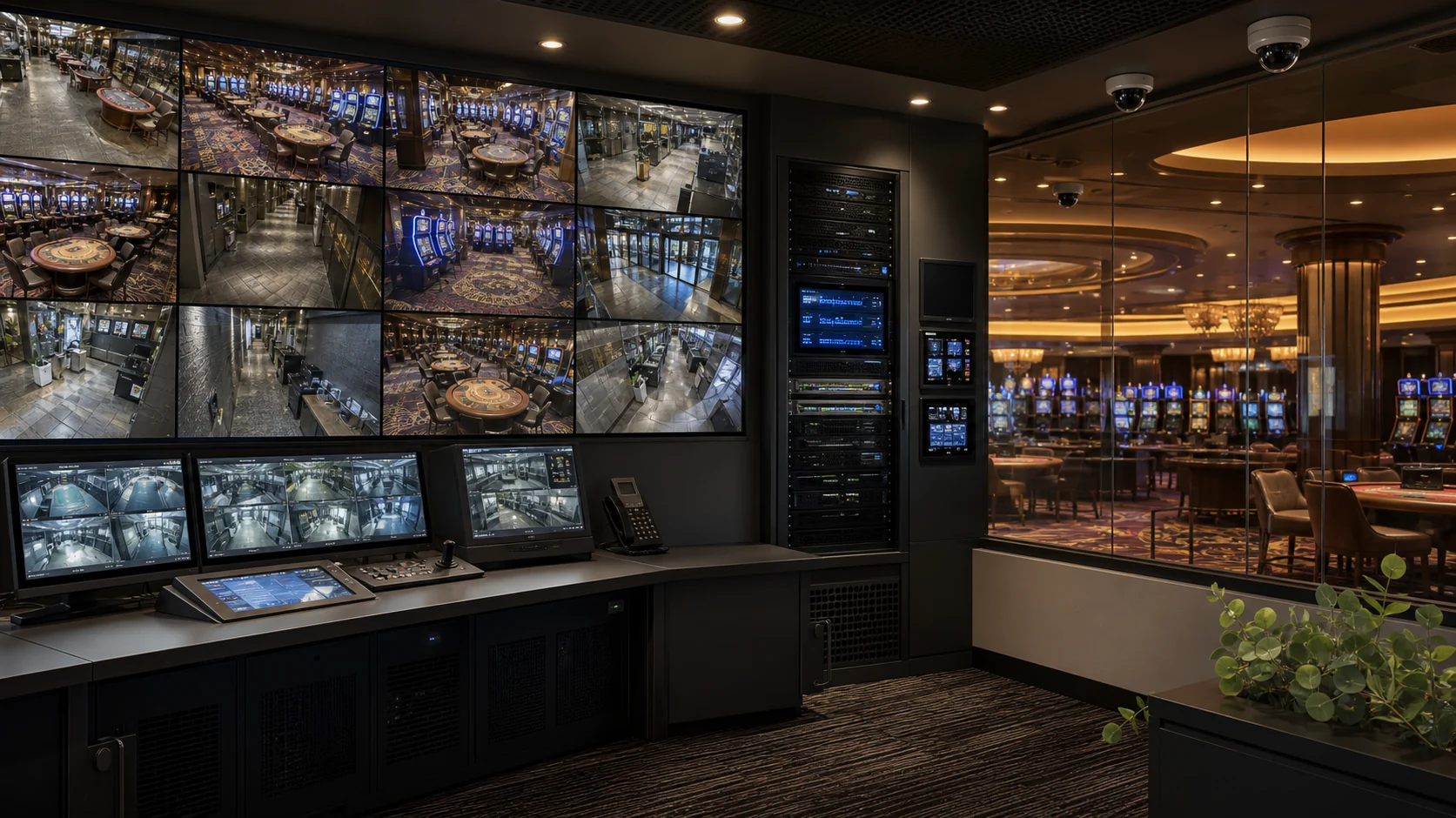
Plan workstation quantities, operator sightlines, display sizes, acoustic privacy, task lighting, 24-hour ergonomics, secure storage, incident coordination and amenities from the intended operating model. Adjustable furniture and glare control reduce fatigue; clear zoning helps operators distinguish routine monitoring from incident response.
Define video-management roles, incident queues, health monitoring, map and alarm integration, event bookmarks, export permissions, dual-authorisation needs, audit logging and escalation. Wall displays should present a purposeful shared operating picture rather than duplicate every workstation. Test critical workflows with the people who will actually use the room.
Coordinate access, intrusion, duress and communications.
- Access control: use role-based access, managed credential issuance, prompt revocation, anti-tailgating procedures where justified and complete audit records.
- Door hardware: reconcile security with fire egress, accessibility, life-safety release, door monitoring, power transfer and facilities maintenance.
- Intrusion: define monitored zones, alarm priorities, schedules, verification and authorised response without creating unmanageable nuisance events.
- Duress: provide discreet, tested means for trained staff to request help, with documented response and safeguards against accidental activation.
- Communications: coordinate radio coverage, emergency messaging, secure contact lists and escalation with the broader venue incident plan.
Access schedules should name the owner of every door, permission group, alarm, interface and exception. Temporary contractors, cleaners, entertainers and service technicians need time-limited access aligned to supervision and induction arrangements.
Treat security devices as critical networked assets.
Cameras, recorders, access controllers, intercoms and management workstations require asset inventory, supported firmware, secure configuration, network segmentation, encrypted administration where supported, controlled accounts, monitored logs and an approved update process. Remote maintenance should be disabled unless needed, authorised, secured and logged.
Recording availability depends on storage, bandwidth, time synchronisation, cooling and power. Model normal and degraded operation, protect management interfaces, test UPS runtime and document recovery order. Backups are useful only when restoration has been proven.
For evidence integrity, define authoritative time sources, retention rules, export formats, checksums or native verification where available, audit logs, access permissions and chain of custody. Test whether authorised recipients can view an export without exposing unrelated personal information.
Build privacy into the system.
Document the lawful purpose for each form of monitoring, minimise collection to what is necessary, use appropriate notices, restrict access, set justified retention periods and securely dispose of records. Avoid cameras or analytics in places where monitoring would be unlawful or disproportionate. Audio recording and biometric capabilities raise additional concerns and should never be enabled merely because a device supports them.
Complete privacy and legal review before activating analytics, identity matching, licence-plate recognition, behavioural detection or data sharing. Record who can search, view, export and disclose information, and make those actions auditable. Incident response must include privacy breaches as well as equipment failures.
Commission the whole operating system.
Factory and staging tests should confirm compatibility, licences, storage assumptions, secure baselines and failover before site deployment. Site acceptance should verify required scenes under real lighting, door and alarm events, operator permissions, time alignment, recording and retrieval, degraded modes, notifications, export, recovery and documentation.
Handover should include approved drawings, asset and licence registers, administrator and operator guides, configuration backups, certificates, warranties, support contacts, spares, training records and outstanding issues. Maintain a controlled change process for camera replacement, layout changes, software updates, new integrations and access-role changes.
Maintain assurance. Schedule health checks, privacy reviews, access audits, restore tests, capacity reviews, scene revalidation and staff exercises. A system that recorded correctly at opening may become ineffective after furniture, lighting, software or operating procedures change.
Security supplier pathways.
Axis Communications publishes casino-focused video, audio and analytics solution information with Australian partner pathways. Genetec presents unified security for gaming environments across video, access control and operational management. These are discovery links, not endorsements. Confirm Australian representation, authorised integration, privacy fit, cybersecurity posture, exact product support and comparable references.